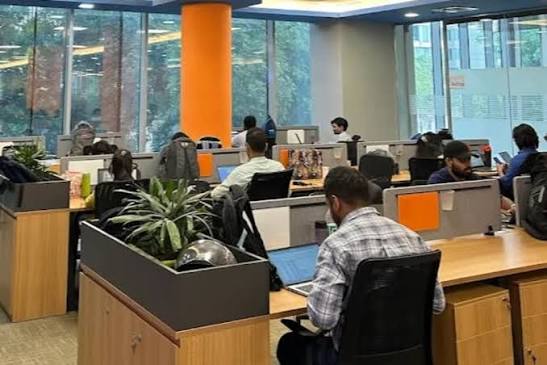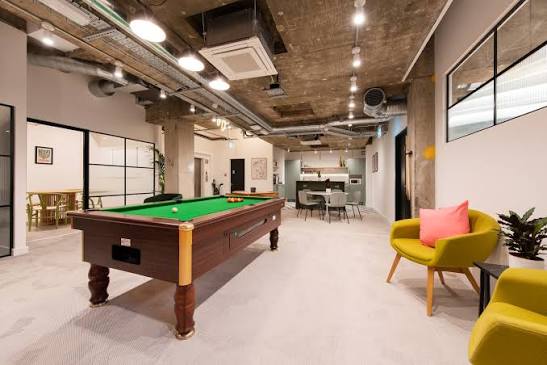
Six people on the payroll do not necessarily require six desks every day. Flexible workspace providers in Reading should be compared against attendance patterns, contract commitments and room access, not a photograph of a busy lounge. Fora, Work.Life, Regus, Spaces and Landmark provide five starting points. This shortlist is numbered for reference, not as an independently tested ranking of service quality or value.
1. Work.Life
Work.Life’s Reading location is at 33 King’s Road. Its published office information describes private, lockable offices, shared amenities and round-the-clock access. It also describes a minimum commitment and an option to change office during a contract. Get the conditions in writing rather than translating “flexible” into “cancel whenever needed”. For a project team, the useful question is whether the agreement accommodates its expected staffing changes without requiring a completely new commercial arrangement.
2. Fora
Fora lists Thames Tower on Station Road, close to Reading station, with private workspace, coworking and meeting-room options. That location makes it worth investigating when visitors arrive by rail. Do a normal working-day journey before deciding. General property material at {Estate Crowns|https://estatecrowns.com/} can form part of wider reading, but travel time and office terms require direct checks. A station address will not compensate for a suite that cannot handle your team’s calls.
3. Regus
Regus has Reading workspace locations, including Davidson House at Forbury Square in published local listings. Compare the specific building and product rather than assuming the brand name describes one uniform package. A day office, dedicated office and coworking membership should not be priced as interchangeable choices. Alongside broader research through {Housing Paths|https://housingpaths.com/}, request a written schedule of what your proposed agreement includes. Meeting rooms, visitor arrangements and out-of-hours access deserve separate answers before you approve the monthly figure.
4. Spaces
Spaces is listed at 9 Greyfriars Road in Reading. Include it when comparing a central location with other working environments, then test the actual workspace against your routines. A design team reviewing large drawings needs something different from consultants spending most of the day on calls. Property browsing at {Timeless Gates|https://timelessgates.com/} should remain separate from that operational assessment. Ask to see the available office, not merely a show suite or photographs of communal areas.
5. Landmark
Landmark’s Reading workspace is at 450 Brook Drive in Green Park. It provides a different location to compare with the central Reading options. Establish how staff and clients would reach it before making assumptions about convenience. Your team’s transport patterns should decide whether that setting works. If {Prime Condo Now|https://primecondonow.com/} appears among your general property bookmarks, keep it outside the office procurement evidence: only the provider can confirm the space, access arrangements and proposed agreement.
Compare the contract against a busy Tuesday
Say you run a twelve-person consultancy, with eight people attending on Tuesdays and four on other weekdays. Those are example figures, not Reading market data. An office sized around average attendance might fail on the one day everyone needs to collaborate. Price the busiest credible day before celebrating savings.
| Your working pattern | Question for each provider |
| Mostly remote, occasional workshops | Can rooms be booked without a permanent office? |
| Stable core team with visitors | Which guest and meeting-room allowances apply? |
| Recruitment expected soon | What written terms govern a move to more desks? |
An office agreement is closer to a set of adjustable straps than an elastic band. Some adjustments are allowed; others have stops. Ask separately about adding desks, reducing space and leaving. One permission does not imply the others.
For serviced offices in Reading, request an itemised example month based on your expected use. Include any meeting-room bookings, connectivity requirements and optional services. But keep the comparison practical: a cheaper desk that forces staff into paid rooms for routine calls may not produce a cheaper working month. Availability and quotations must be confirmed directly.
FAQs
### Can I use an address without renting a private office?
Some providers advertise virtual-office products. Ask exactly what address use, mail handling and business documentation the proposed product permits.
Should we test the workspace first?
Request a tour or trial if available. Visit during your likely attendance hours and listen to the noise around the desks you would actually use.
Are all memberships suitable for confidential work?
No single membership label answers that. Check enclosed space, screen privacy and call arrangements against the information your team handles.
What should a growing business prioritise?
Written expansion terms and realistic capacity. A verbal promise about future space is not an allocated office.
Price your next working month
Send the same attendance forecast to your preferred Reading providers and request comparable proposals. Tour the actual spaces, check the busy-day fit and read the exit provisions before choosing. Keep the decision tied to work your team must perform, rather than facilities it is unlikely to use.